
Why the U.S. Supports Taiwan
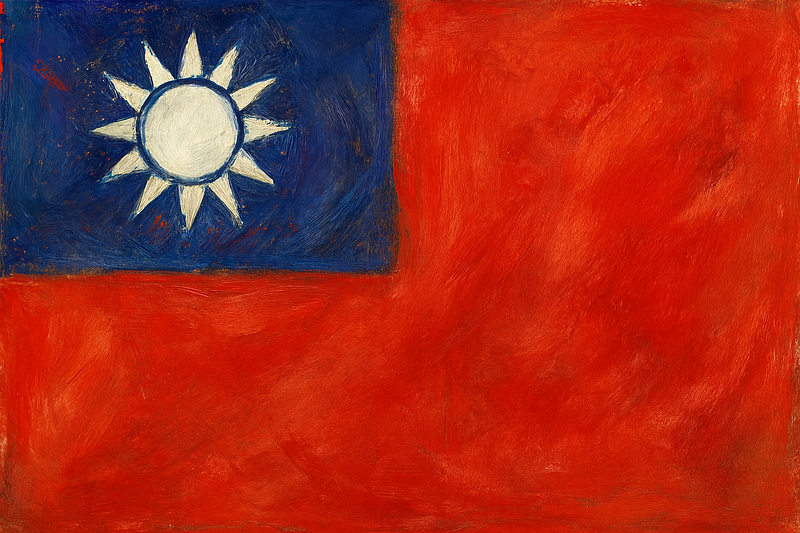
Why the U.S. Supports Taiwan

If the U.S. actually believed in “sovereignty” or “democracy,” it wouldn’t have a resume filled with overthrown governments, puppet dictators, and CIA-backed coups.
Which brings us to Taiwan, the poster child of American “values,” or more accurately, American imperial chess. Because the truth is, the U.S. doesn’t “support Taiwan’s freedom.” It supports Taiwan’s utility.
Taiwan was never some beacon of democracy valiantly standing up to the Big Bad Communist Dragon. It was, quite literally, the losing side of a civil war, the Nationalists, or Kuomintang (KMT), who fled mainland China in 1949 after being defeated by Mao Zedong’s Communist forces. But to understand how that split happened, you have to rewind a few decades.
The two sides, the Nationalists and the Communists, fought together, side by side, against Japanese occupation during World War II. This alliance was a forced marriage; however, two rival visions for China pretending to get along until the enemy was gone.
As the old saying goes, “The enemy of my enemy is my friend.”
These were two sides with entirely different, contrasting ideologies. On one side, Chiang Kai-shek and his Kuomintang, corrupt, elitist, backed by landlords and foreign interests, if you know any history, you know this is the U.S.’s favorite demographic to target for an alliance of common “values”. On the other, Mao and the Communists, peasant-based, revolutionary, and as you can imagine, they were sick of centuries of exploitation by imperial powers and the Chinese ruling class.
Once Japan surrendered, the fight for China’s future began in earnest.
The U.S., not wanting communism to spread after the Soviet Union’s rise, poured money, weapons, and “advisors” into the Kuomintang’s war chest. Billions in aid, courtesy of U.S. taxpayers, to keep China “free.” But Chiang Kai-shek’s regime was a disaster. His officers pocketed supplies, his soldiers starved, and his administration was rotten to the core. The people hated him.
When Mao’s forces finally took over, the KMT packed up what gold reserves they could steal from the Chinese treasury, fled across the strait, and declared Taiwan the “Republic of China.”
So what did the U.S. do? Did it recognize the new government representing the actual billion people on the mainland? Of course not. Washington doubled down on the delusion that the exiled regime in Taipei was the “real” China. Empire loves to pick the governments that best serve their interests, not the ones that actually exist.