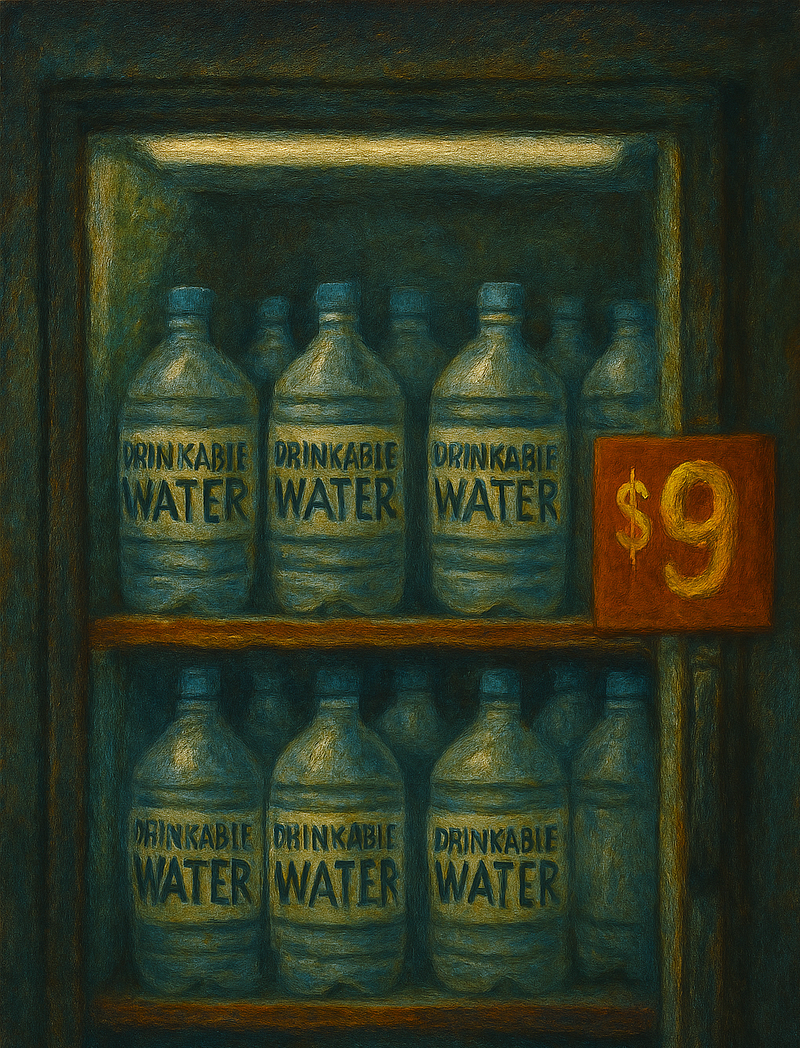
The stuff that literally keeps us, and all life, alive. It should be the one thing a modern, civilized empire would guarantee to its people right? Food? Debatable. Healthcare? Ha. Housing? Please. But water? Come on…
Back in 2010, the United Nations had the audacity to pass a resolution declaring water and sanitation a human right. A basic, universal necessity. The U.S., beacon of freedom and moral superiority, promptly voted against it.
Recognizing water as a human right would mean, you know, actually having to provide it to people. If there’s one thing America hates more than giving up its endless wars, it’s the idea of providing people something a service that they can’t price gouge.
Washington later mumbled something about “supporting the principle” of water access. But don’t ever confuse platitudes with actual law.
On the federal level, there is no guarantee. None. Instead, water in America is treated as a “utility,” subject to state and local regulation, which basically means if you can’t afford it, tough luck.
Yes, water shutoffs are completely legal. Detroit and Baltimore have already demonstrated just how heartless this can get, with mass disconnections hitting low-income residents like some dystopian punishment for being poor.
Can’t pay your bills? Guess you didn’t deserve to drink water. Problem solved.
California, ever the progressive guinea pig, passed a law in 2012 declaring access to clean, affordable water a “human right.”
Sounds nice on paper. But enforcement?
Let’s just say uneven is a generous word. Laws that declare something a right without any funding or structure to make it real are basically just pretty words with zero impact.
Subscribe to continue reading the rest of this article.