
Trump The Demagogue
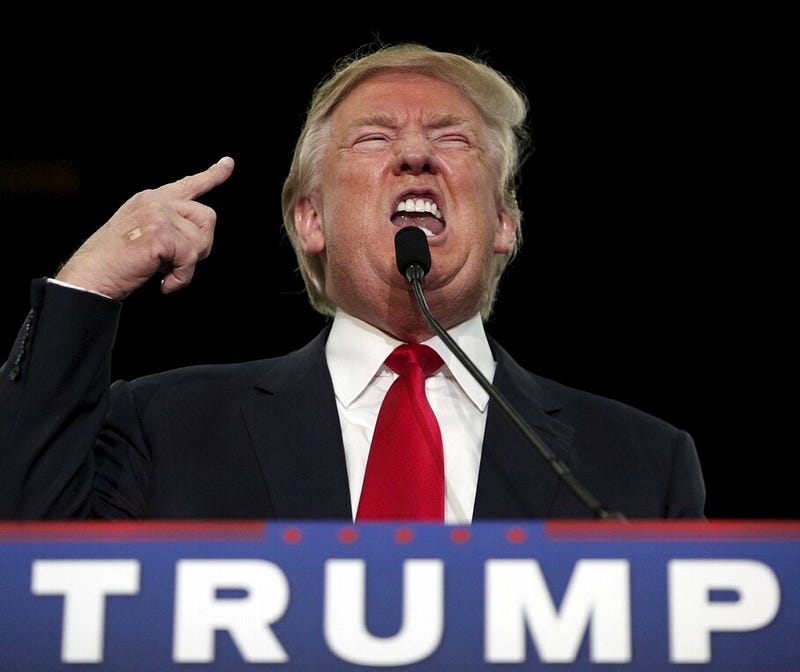
Trump The Demagogue
Populist leaders and the cult of personality

Donald Trump’s ascent to the highest office in the land came with his own trademarked version of populism, one that many in the country thought sounded great to them.
His brand of populism, however, had many elements that paralleled the key characteristics of a demagogue - Basically, someone who would promise them tons of things that they have no intention of ever fulfilling, saying whatever they need to get elected.
His Appeal
Trump’s rhetoric often appealed to the emotions, fears, and hopes of his audience. He tapped into a sense of dissatisfaction and disillusionment among many Americans, particularly those who felt marginalized by the political establishment.
His messages, frequently delivered in a straightforward and unfiltered manner, cut through the traditional political discourse, reaching a base of supporters who felt unheard by the mainstream, and many of whom desired the “good ole days” and may have some latent racism to boot. This makes it easier to believe that immigrants are ruining everything, rather than seeing behemoths like Amazon paying less taxes than the average person who considers themselves middle-class.
Simplifying Complex Issues
A key aspect of Trump’s communication style has been the simplification of complex political and social issues, something more digestible for his constituents. This also helps to give them a sense of camaraderie with him, he doesn’t give a shit about any of them.
This approach made these issues more accessible to his base but often at the expense of nuance or telling the truth. For example, his promise to build a wall along the U.S.-Mexico border was a simplistic solution to the multifaceted issue of immigration, and his portrayal of the media as the “enemy of the people” simplified the complex nature of news reporting and public accountability, although as with other conspiracies, there is often a thread of truth in the claim.
This rhetoric mixed with the DNC’s blatant biases backing Hillary and then Biden over Bernie did bring about more of the populace becoming disillusioned with the media’s biases and agendas, which in turn has caused a greater distrust of mainstream media even among the left. Not necessarily a bad thing since MSM is essentially just pro-jingoistic and corporate propaganda machine and often uses fearmongering to manipulate the population into war or to allow the government to use more spying on its own populace.
Rhetoric vs. Rational Policy Discussion
Trump’s campaign speeches and Twitter feed were replete with bold statements and promises that energized his supporters, and even now this plays out on his own “Truth Social” or whatever it’s called. However, these of course lacked detailed policy discussion or rational argumentation, but that just appeals to his base even more, since they are less interested in the intricacies of policy and more in decisive action and straightforward solutions, both of which he promises but doesn’t deliver on. They also enjoy his theatrics and this has evolved into a cult of personality more than anything.
Impact on Political Discourse
The impact of Trump’s populist style on political discourse has been significant. It polarizes public opinion and often bypasses rational debate in favor of emotional engagement.
This approach, while effective in rallying support, also contributed to a more divided and less nuanced understanding of critical issues in the public domain. This also made his followers ripe for the picking when Qanon conspiracies came about, and some of these individuals eventually ran for office. Giving us the gift of politicians talking about “Jewish space lasers” and other nuggets of insanity.

Major Promises and the Reality
Donald Trump’s presidency was characterized by a series of bold promises that were pivotal in his campaign and tenure. However, the follow-through on many of these commitments often revealed a disparity between rhetoric and reality, a hallmark of the demagogic approach.
The Border Wall with Mexico
Perhaps the most iconic of Trump’s promises was the construction of a wall along the U.S.-Mexico border. This was not just a policy proposal but a symbol of his broader stance on immigration and national security. Trump vowed not only to build the wall but also insisted that Mexico would pay for it.
Reality Check
While some construction and reinforcement of existing barriers occurred, the comprehensive wall Trump promised was far from realized. Funding became a major hurdle, with U.S. taxpayers, not Mexico, footing the bill for the portions that were built. He promised something he couldn’t deliver, and when it fell through he of course blames everyone else but himself.

The most significant of the issues he ran into was funding. Contrary to his assurance that Mexico would pay for the wall, it became clear that the financial burden would fall on the U.S. government. I’m not really sure who ever really believed that Mexico was somehow going to pay for something like this. Securing funds for the wall led to political standoffs, including a government shutdown, and required re-allocation of funds from other areas, such as military construction projects, not that they’re hurting for funding.
The actual construction of the wall also presented challenges. By the end of Trump’s term, new barriers had been added, but they never have resembled the expansive wall he promised. The construction faced legal, environmental, and logistical hurdles, slowing down the process. With instances of states attempting to take private property, destroying Native American burial grounds, and more. Things that right-wingers are usually against. Additionally, a physical wall wasn’t likely ever going to make much of a difference in reality.
“If you build a 20 ft wall you create a market for 21ft ladders.”
Repeal and Replacement of Obamacare
Trump repeatedly promised to repeal and replace the Affordable Care Act, AKA Obamacare. This pledge was aimed at addressing what he portrayed as the failings of the existing healthcare system and to fulfill a long-standing Republican goal. He promised to remove regional restrictions on health insurance plans so that they would have to compete with each other and drive down prices, this never happened. Likely because lobbyist money is just too good to turn down. He criticized the ACA for its perceived flaws, including high premiums and limited choices, and vowed to replace it with a plan that would provide “insurance for everybody” with lower costs and better coverage. Notably, a critical moment came when the late Senator John McCain cast a deciding vote against the repeal.
Reality Check
Despite several attempts, the Trump administration was unable to fully repeal and replace Obamacare. The legislative process proved challenging, with resistance even within his own party since many of their constituents would’ve been pissed off at losing their health insurance, many not even realizing that the Affordable Care Act = Obamacare. The promise was a rallying cry during the election but when confronted with the realities of policy-making, political negotiation, and lobbyist cash it became yet another promise he couldn’t actually carry through with.
Draining the Swamp
“Draining the swamp” was another major promise of Trump, symbolizing his commitment to reducing corruption, cutting down on lobbying, and bringing fresh faces to Washington D.C. This promise aimed to resonate with voters tired of traditional politics and corruption.
Reality Check
While in office, Trump’s approach to “draining the swamp” was met with mixed results and apparent contradictions. On one hand, his administration implemented some measures aimed at reducing the influence of lobbyists, such as imposing a five-year lobbying ban for government officials after they leave the administration.
However, the reality of his tenure often contradicted this narrative. Trump appointed several individuals with deep ties to industry and lobbying to key positions in his administration. Additionally, there were numerous instances where decisions and policies appeared to favor special interests and the political elite, undermining the promise to cleanse the political system.
- Tax Cuts and Jobs Act of 2017: One of the signature pieces of legislation during Trump’s tenure was the Tax Cuts and Jobs Act. While it included tax cuts for individuals, it significantly lowered corporate tax rates from 35% to 21%. Critics argued that the bulk of the benefits went to corporations and the wealthy, suggesting it favored these groups over the average American taxpayer.
- Deregulation Efforts: The Trump administration pursued a broad agenda of deregulation across various sectors, including environmental, financial, and health and safety regulations. For instance, rolling back environmental regulations was seen as a move that favored industries such as coal, oil, and gas, which had been subject to stricter environmental oversight prior to his presidency. While supporters viewed this as necessary for economic growth and reducing governmental overreach, critics saw it as favoring corporate interests at the expense of environmental protection and public health.
- Appointment of Industry Insiders: Several of Trump’s appointments to key positions in his administration were seen as favoring special interests. For example, he appointed Scott Pruitt, a former Oklahoma Attorney General with close ties to the fossil fuel industry, as the head of the Environmental Protection Agency (EPA). Pruitt’s tenure at the EPA was marked by efforts to roll back environmental regulations, raising concerns about the influence of the industries he was supposed to regulate.
- Healthcare Policies: Efforts to repeal the Affordable Care Act (Obamacare) and replace it with a new healthcare plan were seen by some as favoring certain healthcare industries. Critics argued that the proposed changes would benefit insurance companies and pharmaceutical companies at the cost of reducing protections for patients with pre-existing conditions and expanding healthcare access.
- Relaxing Lobbying Restrictions: Despite the initial imposition of a five-year lobbying ban, the Trump administration later eased some of its own lobbying restrictions. For instance, an executive order in January 2021 rescinded the five-year lobbying ban for administration officials, potentially allowing them to lobby the government soon after leaving their government roles.
Ultimately Trump’s tenure as president showed us the amount of support a demagogue who has no real ethical standards or character can accomplish. His only real accomplishment seems to be that he built a cult of personality that fed into his narcissism and ego.
He promised people the moon but couldn’t deliver on almost any of his promises, and in the end, buckled to the establishment for the most part. He did highlight some major issues in the country, like corporations controlling D.C. through lobbyists, and the military-industrial complex constantly pushing for war, but ultimately did nothing to fix this issue.
If he wins another term it’ll be interesting to see what decisions he makes that are different, many fear that he will fully embrace his narcissism and ego and try to declare himself a dictator. If he’s able to do this it’ll be because of all of the checks and balances on the executive branch removed from the government since the Bush years.
Let’s hope we don’t have to face this scenario, but at the same time lobbying corruption hasn’t been addressed by the current administration. Neither has the U.S. interventionist policies that destabilize Latin America, we see this with the embargo against Cuba that was reinstated by Trump and has stayed in place with Biden, as well as the current policy towards Venezuela.
The U.S. doesn’t want to fix these issues, because the policies help the corporate elite who lobby the lawmakers to get filthy rich. While the lawmakers are all being paid off by corporations these policies won’t change, and neither will the death spiral of the U.S.
Related Articles


