
Title: "Cuba Libre: Unraveling the Tapestry of Revolution"
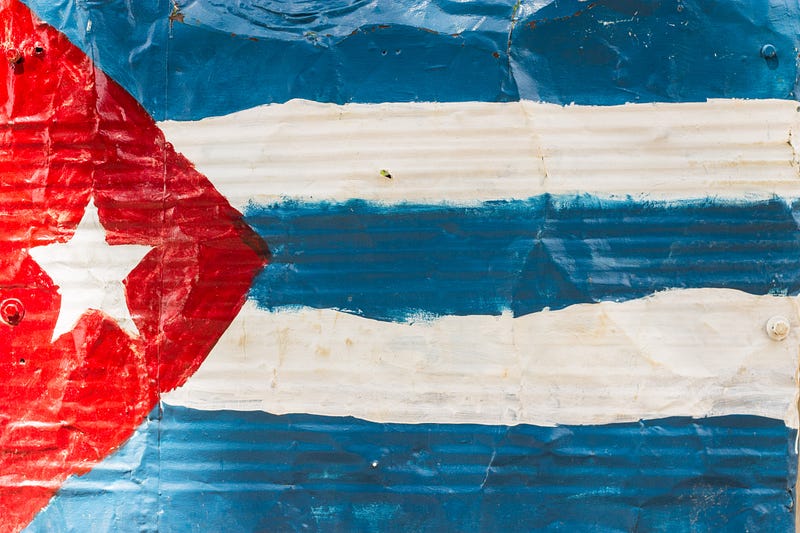
“Cuba Libre: Unraveling the Tapestry of Revolution”

Act 1: Fidel, the Maverick Maestro
In the sultry mountains of the Sierra Maestra, the overture of the Cuban Revolution began. Fidel Castro, a young lawyer fueled by an unyielding passion for justice, emerged as the maverick maestro orchestrating a symphony of resistance against the oppressive regime of Fulgencio Batista.
The late 1950s witnessed the crescendo of discontent, with Batista's dictatorship becoming synonymous with corruption, inequality, and brutality. Fidel, alongside his brother Raúl and a band of rebels, sought refuge in the dense jungles, where the stage for revolution was set. The guerrilla warfare tactics employed by these rebels were not just military strategies; they were a manifestation of a desperate desire for change.
Fidel's charisma became the heartbeat of this revolutionary ensemble. His speeches, delivered with eloquence and conviction, resonated with the Cuban people who yearned for liberation. Clad in the iconic olive-green uniform, with a beard that symbolized the rugged determination of the rebel leader, Fidel commanded attention.
As the rebel forces gained momentum, Fidel's strategic brilliance shone. The Battle of Santa Clara in 1958, a pivotal moment in Act 1, saw Che Guevara's forces capturing the city and contributing to the unraveling of Batista's regime. The maestro's ability to mobilize a diverse coalition of rebels—from students to peasants—mirrored a symphony where every instrument played a crucial role.
The climax of Act 1 unfolded on January 1, 1959, as Fidel and his rebels triumphantly marched into Havana. The baton of revolution had passed, and the maverick maestro assumed the role of the nation's leader. The overthrow of Batista marked not just a change in government but a seismic shift in Cuba's destiny.
Fidel's charisma, however, went beyond the battlefield. His vision for a new Cuba, free from the shackles of imperialism, was articulated in fiery speeches that blended political ideology with a touch of humor. The charismatic leader's commitment to social justice, land reform, and the eradication of inequality laid the foundation for the acts that would follow.
As the curtain fell on Act 1, Fidel Castro stood at the forefront of a nation on the cusp of transformation. The maverick maestro had conducted the prelude to a revolution that would echo through the annals of history.
Act 2: Che Guevara, the Rebel Romantic
In the aftermath of the revolutionary overture, Act 2 brought forth a central character whose persona transcended the battleground—the rebel romantic, Ernesto "Che" Guevara. Born in Argentina, Che's journey towards becoming a revolutionary icon was a tale of wanderlust, self-discovery, and an unwavering commitment to social justice.
Che's early travels across South America, chronicled in his iconic "Motorcycle Diaries," laid the foundation for his revolutionary fervor. The injustices he witnessed fueled a fire within him, driving him to seek a higher purpose beyond personal ambition. His journey, akin to a poetic pilgrimage, shaped the rebel romantic who would soon stand shoulder to shoulder with Fidel Castro in the Sierra Maestra.
Arriving in Cuba with the idealism of a dreamer and the pragmatism of a guerrilla strategist, Che quickly became an indispensable force in Act 2 of the Cuban Revolution. His distinctive appearance—a beret perched on his head, eyes ablaze with determination—became an emblem of revolutionary zeal.
Che’s role extended beyond the battlefield. He emerged as the ideological architect of the revolution, shaping the principles that would guide Cuba’s transformation. His concept of the "New Man," an individual committed to socialist ideals, resonated through the revolutionary narrative. Che was not merely a military tactician; he was a guerrilla philosopher, advocating for a world free from imperialistic oppression.
As the revolution unfolded, Che's impact reverberated on the international stage. His impassioned speeches at the United Nations and other forums sought to ignite a global flame of solidarity against imperialism. The rebel romantic envisioned a world where the fight for justice knew no borders, a sentiment that resonated with like-minded revolutionaries worldwide.
However, Act 2 was not without its complexities. Che's departure from Cuba to pursue revolutionary ventures in other parts of the world added a tragic dimension to his story. The rebel romantic met his heroic end in Bolivia, becoming a martyr for the global leftist cause.
In the grand tapestry of the Cuban Revolution, Che Guevara remained a symbol of unwavering commitment. His legacy wasn't confined to Cuba; it echoed through the struggles of those fighting for a world where justice wasn't just an ideal but a lived reality. Act 2 unfolded as a poignant chapter, portraying Che as the rebel romantic whose ideals transcended borders and inspired generations.
Act 3: Socialism, Cigars, and Healthcare
As the revolutionary symphony continued, Act 3 unfurled a kaleidoscope of societal transformation under the leadership of Fidel Castro. This act wasn't confined to the battlegrounds; it seeped into the very fabric of Cuban society, weaving together strands of socialism, education, healthcare, and resilience.
Socialism became the guiding principle, steering Cuba away from the capitalist currents of the time. Fidel's vision, shaped by Marxist ideals, sought to create a society where collective well-being trumped individual success. The revolutionary government embarked on a journey to redistribute wealth, nationalize industries, and break free from the economic chains of imperialistic influences.
Education emerged as a cornerstone of this socialist utopia. The literacy campaign of 1961, a monumental initiative, saw thousands of young volunteers fanning out across the nation, bringing the gift of literacy to even the remotest corners. Education ceased to be a privilege; it became a fundamental right, empowering Cubans to engage with the world with newfound knowledge.
Healthcare underwent a revolutionary overhaul, symbolizing a commitment to the well-being of the people. A comprehensive healthcare system emerged, emphasizing preventive care and accessibility for all. The result was a nation that not only boasted medical advancements but also saw a dramatic improvement in life expectancy and infant mortality rates.
Amidst these transformative endeavors, the world-famous Cuban cigars continued to be rolled, but now they carried the aroma of a revolutionary spirit. Cuba's defiance against the capitalist norm reverberated globally. The economic embargo imposed by the United States cast a shadow, but the resilience of the Cuban people, coupled with the allure of their revolutionary experiment, captured the imagination of sympathizers worldwide.
Act 3 was not without its challenges. The economic strains, exacerbated by the embargo, tested the endurance of the Cuban Revolution. Yet, the commitment to socialism endured, creating a society where the pursuit of individual success was harmonized with a collective responsibility for the greater good.
The act concluded with Cuba standing as a testament to the possibilities of a socialist experiment. The echoes of Act 3 continue to resonate, reminding the world that societal transformation is not just a political strategy but a profound commitment to human dignity, equality, and the pursuit of a collective dream.
Act 4: The Embargo Tango
In the intricate choreography of the Cuban Revolution, Act 4 introduced a dramatic turn—the embargo, a diplomatic tango between Cuba and the United States that would shape the nation's destiny for decades to come.
The embargo, born out of Cold War tensions, was a strategic move by the United States to isolate Cuba and stifle its economic lifelines. It transformed the revolution's rhythm into a complex dance, where each step carried political repercussions and economic consequences. The embargo wasn't merely a policy; it was a pervasive force that affected every facet of Cuban life.
Economically, the embargo placed a straitjacket on Cuba's development. Trade restrictions and limitations on foreign investments created a challenging economic landscape. The scarcity of resources became a constant companion, turning the pursuit of progress into a dance with ever-shifting partners.
Diplomatically, the embargo influenced the nation's relationships on the global stage. Despite being economically encumbered, Cuba maintained a defiant stance against the embargo, garnering support from nations sympathetic to its revolutionary cause. The diplomatic dance involved strategic alliances, international solidarity, and navigating the intricacies of a world divided by Cold War ideologies.
The embargo's impact wasn't confined to geopolitics; it seeped into the daily lives of the Cuban people. Technological advancements, consumer goods, and even basic necessities became elusive, turning the Cuban experience into a dance of resilience. The nation learned to adapt, finding alternative paths to progress and self-sufficiency.
The global stage witnessed diplomatic performances and counter-maneuvers. Cuba's resilience, despite the embargo, showcased a nation determined to hold its ground. The economic challenges spurred innovation, leading to advancements in fields such as biotechnology and healthcare that garnered international acclaim.
The embargo tango also became a symbol of defiance. Cuba's steadfast commitment to its revolutionary principles in the face of external pressures resonated not only within its borders but across the globe. The dance, though burdensome, became a testament to the enduring spirit of the Cuban Revolution.
As Act 4 unfolded, the embargo remained a central theme in the Cuban narrative. The dance between Cuba and the United States, marked by diplomatic twists and economic turns, showcased the resilience of a nation that refused to be swayed. The embargo tango, while disruptive, became a poignant chapter in the ongoing story of the Cuban Revolution.
Conclusion: A Revolution’s Echo
As the curtain fell on the revolutionary epic, the conclusion unfolded as a reflection on the profound impact of the Cuban Revolution. It was not merely the end of a narrative but the beginning of a lasting legacy that reverberated through the corridors of history.
The Cuban Revolution, with its leftist cadence, left an indelible mark on the social, political, and economic landscape of the nation. Fidel Castro, the maverick maestro, and his band of rebels had orchestrated a symphony that transformed Cuba from a playground of imperialism to a bastion of socialism. Act 1, marked by the overthrow of Batista, set the stage for the revolutionary odyssey.
Act 2 introduced Che Guevara, the rebel romantic, whose idealism and commitment to justice transcended borders. His role in shaping the ideological foundations of the revolution added depth to the narrative, emphasizing a global solidarity against imperialism.
Act 3, the era of socialism, education, and healthcare, witnessed the Cuban society undergoing a profound metamorphosis. The commitment to social equality became a hallmark, symbolized by the nation's emphasis on literacy, accessible healthcare, and an unwavering dedication to socialist principles.
Act 4 brought forth the challenge of the embargo, a diplomatic tango that tested Cuba's resilience. The nation, despite economic constraints, stood defiant, finding innovative ways to navigate the intricate dance of international politics and economic restrictions.
As the grand narrative concluded, Cuba emerged as a testament to the possibilities of a socialist experiment. The echoes of the revolution resonated beyond its borders, inspiring movements for justice and equality worldwide. The commitment to social justice, education, and healthcare became a beacon, illuminating the path towards a society where the well-being of the collective was paramount.
The Cuban Revolution, though not without its complexities and challenges, became a saga of determination and defiance. The conclusion was not an endpoint but a continuation, as the ideals of the revolution echoed through generations, reminding the world that the pursuit of justice and equality was not just a revolutionary dream but a lived reality in the resilient heart of Cuba.
If you’d link to sign up to be a member of Medium you can use the link below. This is my referral link, signing up for membership using this link will cost you the same amount, but I will receive a portion of the dues. So if you enjoy my content, and would like to support me, please feel free to use my link, I would greatly appreciate it!. Thank you! javascript:void(0)