
The Case Against Democracy
The Case Against Democracy
Who should be steering the ship?

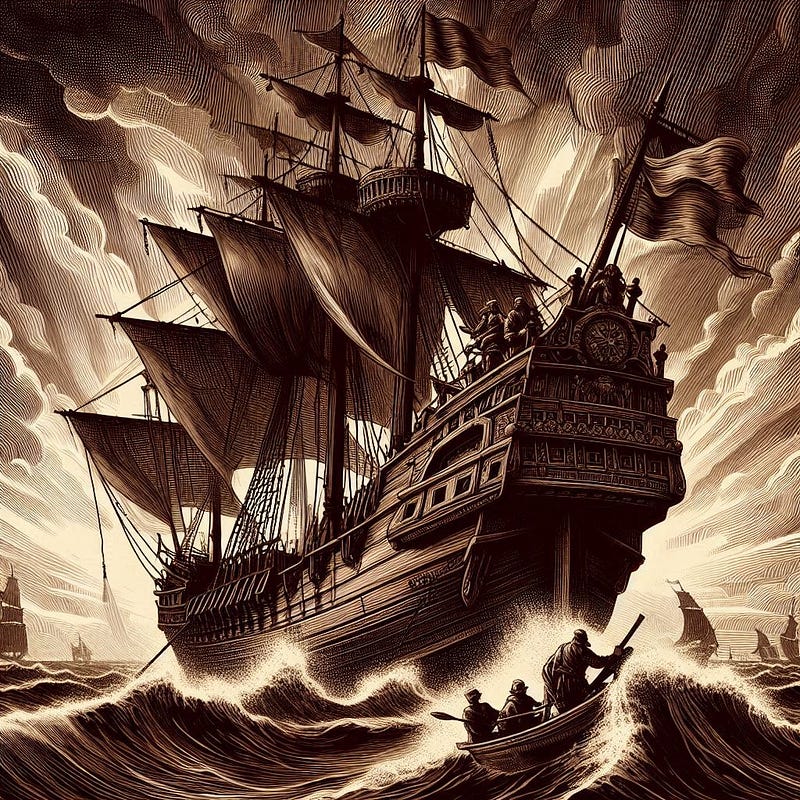
“Imagine then a fleet or a ship in which there is a captain who is taller and stronger than any of the crew, but he is a little deaf and has a similar infirmity in sight, and his knowledge of navigation is not much better. The sailors are quarreling with one another about the steering — every one is of opinion that he has a right to steer, though he has never learned the art of navigation and cannot tell who taught him or when he learned, and will further assert that it cannot be taught, and they are ready to cut in pieces anyone who says the contrary. They throng about the captain, begging and praying him to commit the helm to them; and if at any time they do not prevail, but others are preferred to them, they kill the others or throw them overboard, and having first chained up the noble captain’s senses with drink or some narcotic drug, they mutiny and take possession of the ship and make free with the stores; thus, eating and drinking, they proceed on their voyage in such manner as might be expected of them.”-Plato “The Republic”
In this story the ship is representative of the governing style of a city-state, the captain represents the ship’s owner, who are the people. The Sailors represent the citizens who fight for control of the ship, and the philosopher-king represents the benevolent ruler, who is actually fit to be the captain of the ship.
Plato was obviously against democracy even though he lived in one. Perhaps having his mentor Socrates executed for “corrupting the youth” of Athens, teaching them to think critically rather than just accept what they’re told, may have had something to do with this belief. Athens saw his teachings as promoting subversion of the government, and couldn’t have that.
We’ve all been told that democracy is the best system that can exist for governance, and perhaps it is. At least when a populace is well-educated, informed, and capable of critical thinking. I don’t mean that the people need to be necessarily university-taught, but at least aware of what’s going on, and of historical events so they can keep history from repeating itself. Another key skill in this day and age is being able to decipher what is even real news and not just propaganda. Not that propaganda hasn’t always been spread, but with our newfound ease of access to massive amounts of “news”, it takes a good bit of effort to sift through and decipher what are real stories.
This ability to tap into such a vast amount of information should be a boon for society, unfortunately, those who would control us are using it as a means to disseminate propaganda at an unprecedented rate. They have to do this, because if we all saw the truth then their time would be very limited.
One issue with democracies, at least ones that don’t promote education or even give easy access to it, is that they become a popularity contest rather than appointing people to office who are qualified.
This is a key difference between the U.S. and China. China allows any eligible young people to take the National Civil Service Examination (国家公务员考试), and if they score high enough on this exam they can move their way up in the government, even if they were born in the most rural poor area of the country.
Meanwhile, in the U.S. we essentially have royal families, the Bushes, Clintons, Kennedys, etc. Plus we have lawmakers who have active dementia, have trans ischemic attacks (TIA) while on camera talking to the press, and who believe in Jewish space laser satellites. These unqualified folk split the government into two parties who take turns ruling or being the opposition, never really giving any choice, but constantly fundraising and taking in donor money while making sure next to no policy that benefits any of the working class ever gets passed.
“An informed citizenry is at the heart of a dynamic democracy.”-Thomas Jefferson
“The ignorance of one voter in a democracy impairs the security of all.”-John F. Kennedy
If the people aren’t informed, and capable of critical thinking either due to a lack of education or access, then the best demagogue wins.
It also doesn’t help that these candidates can promise anything they want and once they’re in office aren’t held to account to carry through with anything they promise, especially if they aren’t running for re-election.
“Truth is relative. Truth is what you can make the voter believe is the truth. If you’re smart enough, truth is what you make the voter think it is. That’s why I’m a Democrat. I can make the Democratic voters think whatever I want them to.”-James Carville
It’s honestly surprising to me to see a candidate even attempt to carry through with their promises. Even when they do they are often sabotaged by the other party or members of their own party. Party loyalty only goes so far since the lawmakers get their real payroll from the lobbyists. Those are the folk they are truly loyal to. I also suspect that at their dinner parties, these lawmakers draw straws at times to pick who will be the new villain and vote against whatever popular bill is next up on their roster.
“Democracy is supposed to give you the feeling of choice, like Painkiller X and Painkiller Y. But they’re both just aspirin.”-Gore Vidal
But the mass of the populace doesn’t want to hear this inconvenient truth, so in most cases, they just keep cheering on their team and taking a diametrically opposed stance to whatever the other team currently wants done.
Sometimes humorously or sadly enough, that may be the exact same thing their candidate had previously pushed for. Examples include: ACA started with Romney, then was adopted by Obama, then criticized by Republicans. NAFTA was initially set up by George H.W. Bush, signed into law by Bill Clinton, and now has been criticized by both parties. Charter schools were initially proposed by Democrats, then adopted and promoted by Republicans, and now Democrats are against them.
There are many things to criticize about our “democracy” like the fact it isn’t even really a democracy, not as long as the popular vote means nothing. But Plato’s criticisms are accurate as well, really should we have people who aren’t qualified at all running our government, or voting for who will run the government? The majority of voters just stick to one side of the aisle or the other, it doesn’t matter who their team puts up as the candidate. They just don’t have the mental or emotional energy to get invested in knowing what these candidates truly stand for, and most of the time almost no real change that affects them comes along anyways. So can you blame them?
The media keeps everyone in a tizzy about the latest horrible pandemic, natural disaster, or celebrity fiasco…so I can’t blame people for wanting to tune it all out and just trust that their team will prop up the right person. The media wants engagement after all, and will sap you of any energy you have left if you allow it.