
Remembering Africa’s True Name
Remembering Africa’s True Name
The One Stolen by European Colonizers

The name Africa didn’t come from Africans. It came from colonizers who didn’t even understand the land they were carving up. Before Rome stamped its imperial seal on the world’s second-largest continent, the land we now call Africa had a different name, a name that was rooted in its own civilizations, not in Latin grammar or European conquest.
That name was Alkebulan. Never heard of it? That’s not an accident.
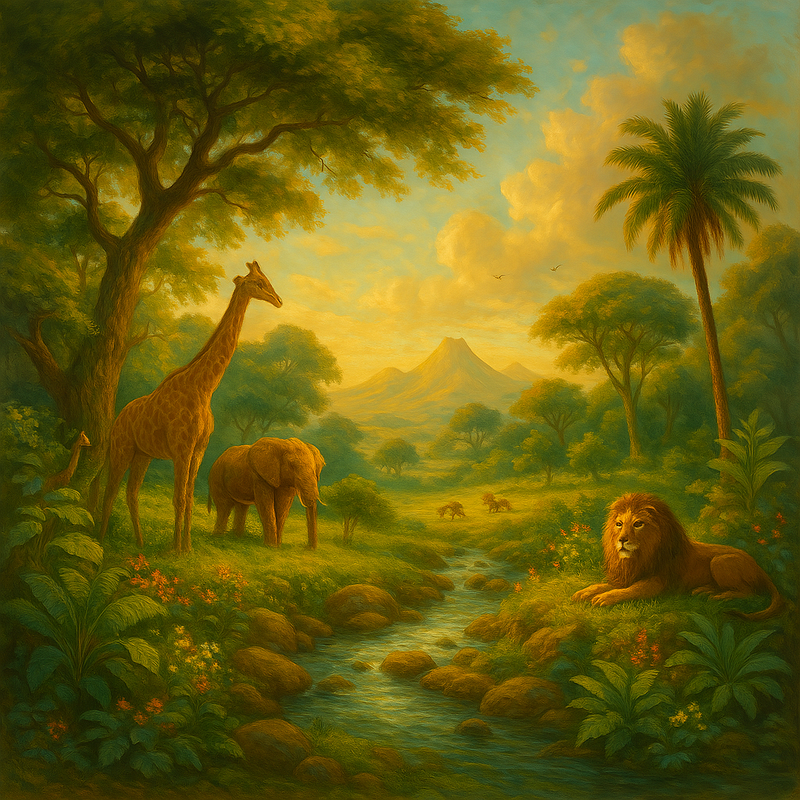
Alkebulan is believed to mean “Mother of Mankind” or “Garden of Eden” in ancient tongues. It is one of the oldest recorded names for the continent. The name traces back thousands of years, predating Greek or Roman interaction with the region. Linguists and historians suggest it may have stemmed from early Arabic or Kemetic (ancient Egyptian) dialects, though its full etymological trail has been deliberately obscured by centuries of imperial erasure. What matters is that it wasn’t Roman, and it wasn’t European.
It’s more than just poetic that Alkebulan, translates to “Mother of Mankind” or “Garden of Eden”, because science actually backs that up. Genetic and fossil evidence overwhelmingly points to Africa as the cradle of human life, with the oldest known remains of Homo sapiens, dating back over 300,000 years, discovered in present-day Morocco. Mitochondrial DNA tracing also confirms that all modern humans share a common ancestor from Africa. So when ancient civilizations referred to this land as the “Garden of Eden,” they weren’t just being metaphorical; they were remembering something real. Something we’ve buried under centuries of colonial maps and missionary lies.
The name Africa is widely believed to have been derived from the Latin Afri, the Roman term for the Berber tribes living near Carthage, in modern-day Tunisia. After Rome defeated Carthage in the Third Punic War, they named the territory Africa terra, meaning “land of the Afri.” The name we all use today for a continent of over a billion people was originally a Roman label for a small region they conquered, and that conquest is still branding the entire continent.
Think about that, an entire landmass rich in history, culture, and language is known globally by a name handed down by its oppressors. Imagine if the entire Western hemisphere were still called Columbia, or if Asia were renamed MarcoPolia. That’s the level of absurdity we’re dealing with here.
Africa wasn’t just a passive landscape waiting for “civilization” to arrive. It was civilization. The pyramids are tourist attractions, mathematical and engineering marvels that still baffle architects today. Ancient Nubia, Kush, Carthage, and Great Zimbabwe weren’t primitive societies, they were urban, literate, and global. Timbuktu had universities when most of Europe was still burning “heretics” for reading.
Somehow, modern history classes manage to jump from Egypt straight to the slave trade without blinking…
Restoring the name Alkebulan is about reclaiming memory. It’s about calling out the centuries of European imperial branding and reminding the world that Africa wasn’t discovered, it was invaded, and it wasn’t empty, it was looted.
Recently, we’ve seen a powerful shift rippling across the African continent, one that has Western powers squirming. From Mali to Burkina Faso to Niger, leaders are kicking out French troops, rejecting IMF loans, and forming regional alliances free from Western strings.
Pan-African movements are gaining steam, calling for economic independence, cultural revival, and unity rooted in Africa’s own traditions, not colonial hand-me-downs. This could be the beginning of Africa reclaiming not just its land, but its story. Perhaps it’s time the continent reclaims its original name, too — Alkebulan. A name that wasn’t stamped on by slave traders or empire-builders, but one that speaks to its soul, and its rightful place as the birthplace of humanity.