
Human Sacrifices in the Bible
Human Sacrifices in the Bible
The Christian God only accepts payment in blood

Growing up in church I’d hear the stories from the Old Testament about God demanding various sacrifices and “burnt offerings”, and the pastor normally rattled this off with enough charisma that it didn’t raise much interest in me.
I just imagined that they burned a portion of their food, or as I got older I realized that they would kill a sheep or other animal like in the instance of the Abraham and Isaac story, which is one of the stories that began to pull at the thread of my doubt about the Bible.
Then there’s the case of the firstborn of Egypt being killed by God, when God requires the Israelites to wipe their doorsills down with blood, to get the angel of death that God has sent to “pass over” their homes. During this section of the Bible God even turns the Nile River into blood.
So what is up with the blood fixation that God has here?
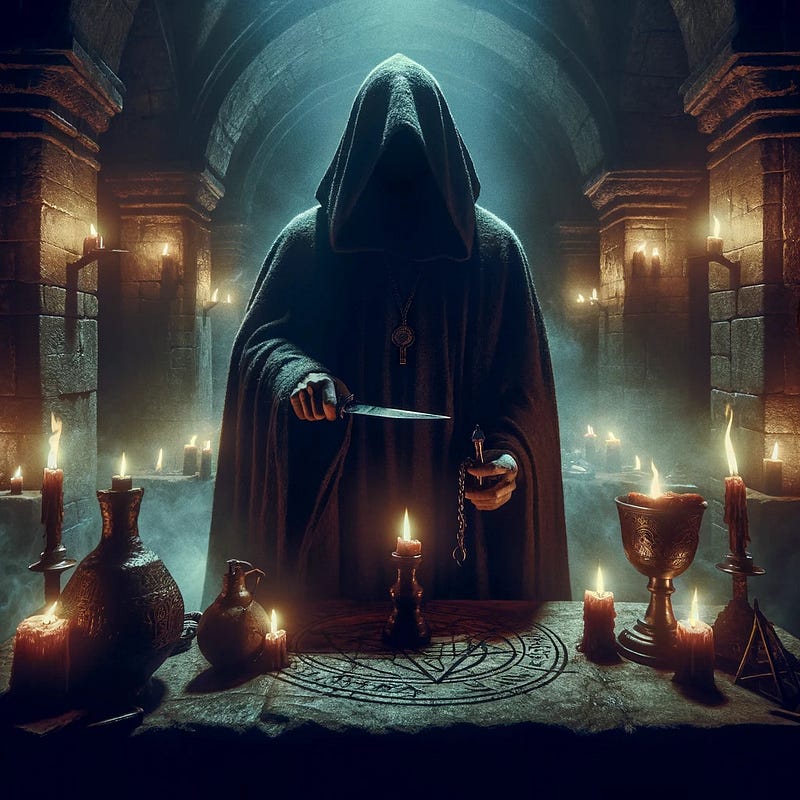
When we see this motif involving blood sacrifices to a supernatural entity in movies or TV shows it’s normally Satanic/demonic, but in the Bible, it’s the exact opposite.
Let’s start with an example that most of us probably already are familiar with:
Abraham and Isaac

2 And he said, Take now thy son, thine only son Isaac, whom thou lovest, and get thee into the land of Moriah; and offer him there for a burnt offering upon one of the mountains which I will tell thee of.
7 And Isaac spake unto Abraham his father, and said, My father: and he said, Here am I, my son. And he said, Behold the fire and the wood: but where is the lamb for a burnt offering?
8 And Abraham said, My son, God will provide himself a lamb for a burnt offering: so they went both of them together.
9 And they came to the place which God had told him of; and Abraham built an altar there, and laid the wood in order, and bound Isaac his son, and laid him on the altar upon the wood.
10 And Abraham stretched forth his hand, and took the knife to slay his son.
11 And the angel of the Lord called unto him out of heaven, and said, Abraham, Abraham: and he said, Here am I.
12 And he said, Lay not thine hand upon the lad, neither do thou any thing unto him: for now I know that thou fearest God, seeing thou hast not withheld thy son, thine only son from me.
13 And Abraham lifted up his eyes, and looked, and behold behind him a ram caught in a thicket by his horns: and Abraham went and took the ram, and offered him up for a burnt offering in the stead of his son.-Genesis 22:2, 7–13
In this tale Abraham brings his son and makes an altar, goes through basically the whole process up until he’s about to murder his own son and then an angel stops him and manifests a ram to be used instead.
This story is taught in church with the lesson highlighting Abraham’s obedience as a good thing. Not focusing on the fact God had already made him wait until his old age to have a son at all.
A son that he could’ve given him prior to him choosing to get an Egyptian sex slave pregnant, and then subsequently leaving her and the child out in the desert for dead.
This just screams of emotional manipulation and a lack of self-confidence in the deity. He gave him this promised “golden child” just to then decide he would make him murder him with his own hands to prove his loyalty to this deity, or else make this man suffer who knows what type of punishment.
Why do all of this to one man?
Also, isn’t it suspect that Abraham didn’t think it was that odd for God to demand him to sacrifice a child? Almost as if this wasn’t unheard of among the Israelites.
As a side note, did anyone else notice that God calls Isaac Abraham’s “only son” in verse 12? I guess God forgot about the son that Abraham abandoned out in the desert, his first son Ishmael even though he’s still alive seeing as how God sent an angel to show Hagar where a well was so they didn’t die of thirst. Perhaps he’s forgetful?
At least in this instance, God didn’t make Abraham go through with it, let’s see what the next case in the “Good Book” holds.