
Hugo Chávez
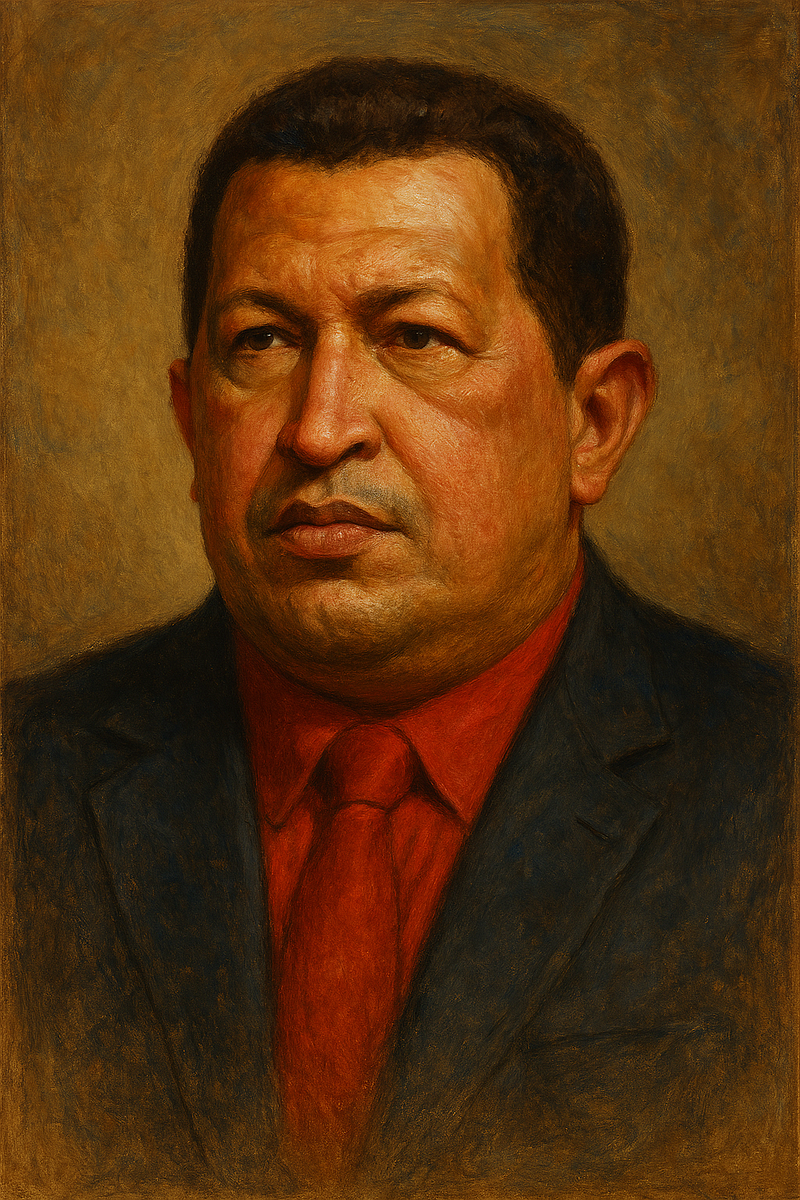
Hugo Chávez
Villain, or Hero of The People?

Hugo Chávez is one of those figures the U.S. establishment still can’t stop gnashing its teeth over. To millions of Venezuelans, he was the first leader who gave them dignity. To Washington, he was a nightmare: another Latin American president who wouldn’t bend the knee to Wall Street, wouldn’t privatize his country into pieces, and who had the audacity to use Venezuela’s oil wealth for Venezuelans instead of ExxonMobil, unforgivable!
When Chávez came to power in 1999, Venezuela was in a neoliberal stranglehold. The IMF and World Bank had bled the country with “structural adjustment programs”, like they’re doing currently to Panama. Poverty was rampant. Health care and education were luxuries. The oil money flowed, just not to the Venezuelan people. Chávez flipped that all around. He nationalized oil revenues and funneled them into programs the elite dismissed as “handouts” but which millions of Venezuelans needed for survival, and hope.
Health clinics appeared in barrios where the only thing the government had ever sent before were cops with batons. Illiteracy dropped to near zero thanks to massive education campaigns. Poverty rates were slashed. Subsidized food programs kept families from starving. These weren’t miracles; they were what happens when you take a nation’s resources out of the hands of foreign corporations and domestic oligarchs and invest them in actual human beings.
Chávez stood apart from so many other leaders due to the way he communicated directly with the people. He didn’t hide behind polished press conferences or five-minute soundbites written by paid consultants; he would go on television for hours on his program Aló Presidente and actually have long-form discussions with the nation. He’d explain policy, take questions, tell stories, sometimes ramble, sometimes sing, but it was raw, direct, and unfiltered.
Not everyone agreed with everything he said, but they knew he was talking to them, not just to elites in Washington or bankers in New York. These long-form conversations created a sense of connection between Chávez and ordinary Venezuelans that terrified the ruling class, because it broke the wall of distance most politicians hide behind.
No wonder the poor called it a revolution.