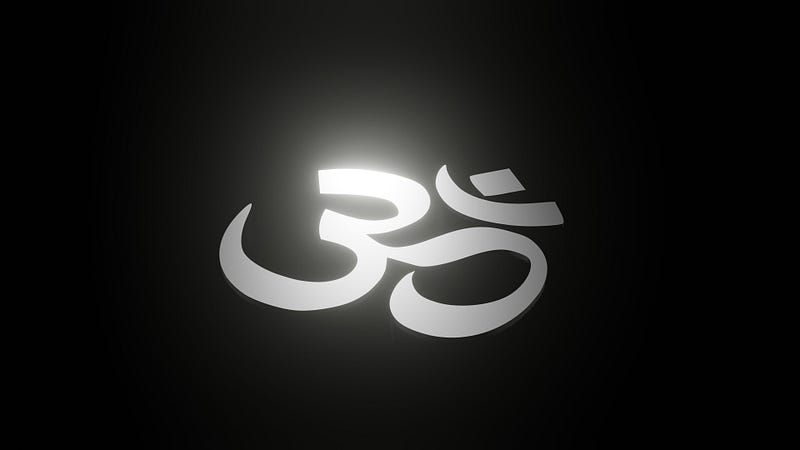
In the vast realm of religious diversity, Hinduism often finds itself labeled as polytheistic, and sure, it’s not an entirely inaccurate descriptor. But let’s take a moment to peel back the layers, dust off the misconceptions, and delve into the heart of Hindu philosophy — where the multitude of gods isn’t a cluttered divine attic but rather a symphony conducted by the unseen hand of Brahman.
Now, when you say “polytheistic,” images of a pantheon with countless gods may dance in your mind. And yes, Hinduism boasts an extensive lineup of deities, each with their own backstories, powers, and maybe even a few divine quirks. It’s like the original superhero cinematic universe, but with more profound allegories and less spandex.
However, lurking beneath this seemingly chaotic divine assembly is a fundamental concept that ties it all together: Brahman. It’s not a god with a long white beard sitting on a cloud; it’s the cosmic glue that binds everything in the universe, including the gods, into one seamless cosmic spectacle. Yes, it is definitely what George Lucas used as his inspiration for the force.
Think of Brahman as the ultimate cosmic energy source, the USB port through which all the divine gadgets get their power. Each god and goddess in Hinduism is like a unique app on your smartphone, serving different purposes but ultimately drawing their energy from the same source.
In the ancient scriptures like the Upanishads and Vedas, the wise minds of Hinduism took a deep dive into the metaphysical pool. They described Brahman as the supreme reality, an entity beyond our human comprehension. It’s not an old man with a long white beard, nor is it confined by the limitations of anthropomorphic representation.
Subscribe to continue reading the rest of this article.