
Divine Cannibalism?
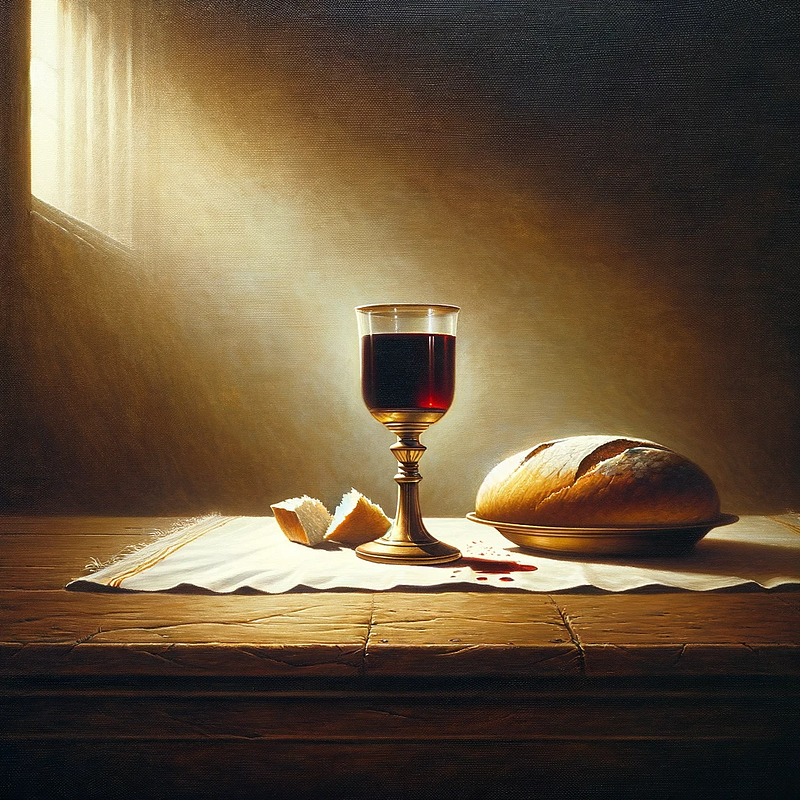
Divine Cannibalism?
Taking a look at the Eucharist

Throughout my childhood, we hopped around to various churches, most of which were protestant of various flavors. At each of these, we would occasionally do communion, or the “Lord’s Supper”. But on a few occasions, we did attend Lutheran and Catholic churches, which would do this ceremony a bit differently.
The main part I noticed that was different was that the priest would administer the ceremony at the front of the church, you’d get a weird little white circular wafer that tasted somewhere between cardboard and Styrofoam, and then take a sip from the same golden goblet with wine in it as the rest of the people at the front of the church, which doesn’t seem to be the most sanitary thing to do, plus even as a preteen I was given wine, which would’ve been illegal if this hadn’t been a religious ritual.

This is vastly different from the protestant church which gives you a small nearly tasteless cracker and a tiny little plastic disposable cup of grape juice, since protestants believe that alcohol is the devil, even though one of Jesus’s miracles was turning water into wine.
What I didn’t realize was the vast difference in the belief structure as well.
There was a divergence at some point in the belief of whether the wafer and wine/juice you drink is symbolic or if it is literally the body and blood of Christ.
This goes back to what Christ said at the Last Supper.
Matthew 26:26–29
itititit
The protestant faith believes that it is an important ritual, but is only symbolic of what Christ said. While Catholics believe that there is a magical form of “transubstantiation” where when the priest says the magic words the horrid wafers and wine literally become Christ’s body and blood, and Lutherans believe in “consubstantiation” where the wafer and wine take on the “substance” of Christ’s body while maintaining the “substance” of the bread and wine simultaneously. Although in either case, I’ve never noticed a change to the flavor of either…
I’m sure most of us at this point start to think that this sounds like some sort of divine cannibalism. But what sort of mental gymnastics are required to not believe that it is cannibalism?
Well, this comes down to some fancy philosophy and terms used in weird ways that most of us likely have never heard. They believe that the “substance” of the bread and wine are converted, but not the “accidents” of them. In this way, they use the word “accidents” to mean the physical characteristics, not someone falling off their bike, or breaking a dish.
So when you eat that found-tasting wafer its inner magical substance has become the body of Christ, but you don’t have to taste human, or divine, flesh.