
Conscious Animals
Conscious Animals
What implications does it have?

Religions primarily focus on the salvation or liberation of souls back to some form of heaven, but they usually don’t concern themselves with animals, positioning humans as something superior to our fellow lifeforms on this planet.
When I was in sixth grade my parents put me in a private Christian school for that year, and I remember at some point after a Bible class I asked the instructor if animals had souls and what happened to them after death. She had a kind look on her face and explained how she loved all of her pets, but that they don’t have souls like us that are preserved after they die.
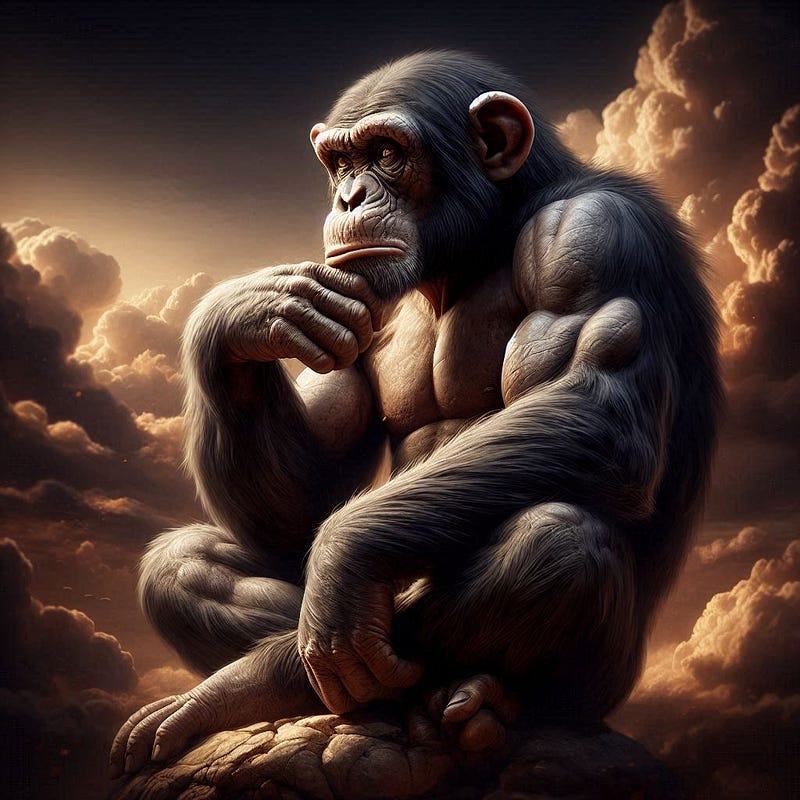
This answer didn’t sit well with me then and that fact has never changed, to my understanding then a soul was what animated this physical form we have, basically synonymous with a spirit, so how would animals not possess one? Anyone who’s had a pet they spent a lot of time with, especially a cat or dog knows there’s a lot going on in that head of theirs, and that they have a very unique personality, and are capable of mischief and kindness. I think any religion that positions us as something separate and vastly superior from these other living beings is fundamentally flawed.
My instructor’s view at that time seems to be basically what the majority of Christians believe, some have deviated slightly from this and will claim that animals have souls but they’re distinctly different from humans, and they usually don’t have any answer for what that really means for any afterlife or their fate at the “Day of Judgement”.
Muslims have a similar view, although unlike Christians the majority of Muslims seem to agree that animals have souls, but again distinctly different from human souls. They’re also very vague on what Allah’s plan is for them, although they do believe they will be resurrected on the “Day of Judgement”.
Judaism believes that only humans have souls and that animals just possess a life force, or “nefesh”, and they also don’t have any explanation really of what happens to animals in the afterlife.
Sikhs believe that humans have individual souls, or atma, and that animals are a part of God’s creation and also possess atma, but just like the previous religions mentioned they don’t really cover what this means for them upon death.
Buddhism thinks of animals as being sentient conscious beings but lower than humans on the samsara cycle due to past karma. Buddhism deviates from these other religions by not believing that any of us possess a permanent eternal soul personalized to us. Instead, they believe that we are a composite of sorts, a collection of Skandhas (aggregates) which include things like form, sensation, perception, mental formations, and consciousness. They teach that our ultimate goal is to realize Anatta (non-self), that the “self” is impermanent, and realize the ultimate reality of Dharmakaya, essentially their version of Brahman.
Jainism believes all creatures, human and animal have a soul or “jiva”, but just like Buddhism they believe that these animals are lower on the samsara cycle due to past karma, and through nonviolence (ahimsa) and asceticism every soul can be liberated from rebirth (samsara).
Hinduism shares many of these beliefs, such as that animals like humans have an “atman” or permanent soul, are also part of the universal soul Brahman, and that they are on a lower level of rebirth due to past karma.
Taoism believes we are all part of the Tao, a life energy that flows through all things, and that upon death we may transform or be reincarnated as something else. It doesn’t imply some type of hierarchy like Hinduism, Buddhism, or Jainism, but rather reinforces the interconnectedness of all things.
Indigenous/Animistic religions are usually somewhat similar to Taoism in this way, they reinforce that we all are kindred, the animals and us, and that our spirits may even interact in the spirit world and possibly come back as some other creature.