Usually, we’re fed a sanitized fairy tale of American history, about brave colonists, benevolent founders, and the “natural” emergence of freedom and democracy. When you look underneath the mythology we’ve all been sold, you end up finding a much more dangerous and illuminating truth.
Poor people of different races were able to put aside their differences and join forces against their mutual oppressor, the elite.
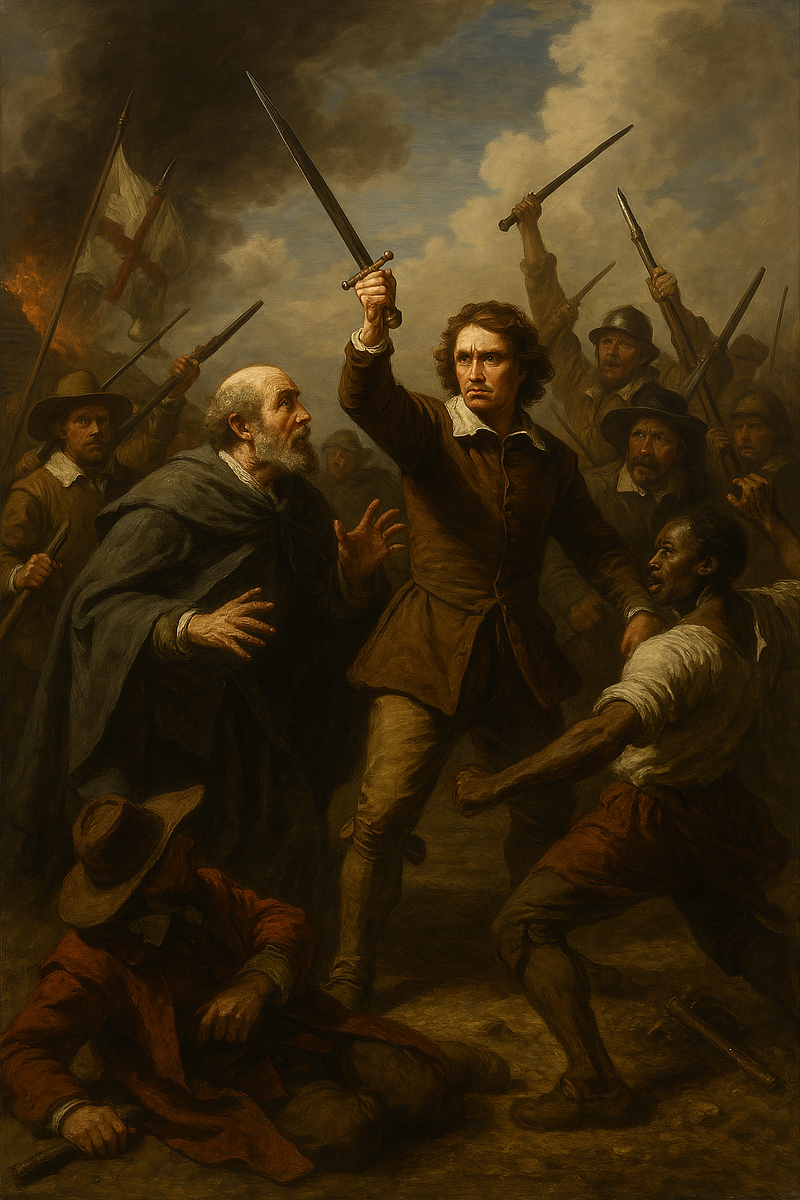
Bacon’s Rebellion in 1676 was a full-scale uprising led by Nathaniel Bacon, a wealthy but disgruntled planter, who, surprising to the elite of the time, was backed up by white indentured servants, poor whites, and enslaved Africans who were fed up with being crushed under the weight of the colonial aristocracy.
William Berkeley, the colonial governor of Virginia, would hand out favors to his inner circle while heavily taxing the frontier poor, implementing corrupt land policies, and neglecting his duty to help protect the frontiers from Indigenous groups who would routinely raid them.
These poor folk united across racial lines and class boundaries to take matters into their own hands. They burned down Jamestown and kept running the colony for months. They showed what happens when the have-nots stop fighting each other and start fighting the real source of their suffering: the people hoarding all the land, wealth, and power.
That was the real threat, beyond the violence, was the example. White indentured servants and Black slaves fighting side by side. That terrified the ruling class more than any musket ever could
Subscribe to continue reading the rest of this article.